
Showing posts with label Doctor Who. Show all posts
Showing posts with label Doctor Who. Show all posts
Saturday, 20 February 2016
Hating to Love
Don't tell anyone, but I might well know something about a few of the essays in this very fine forthcoming volume...


Monday, 9 November 2015
The Black Archive is opening...

Phil Purser-Hallard, one of the smartest people I have the pleasure of knowing, came up with a simple but brilliant idea for a range of books; in-depth studies of single Doctor Who stories by a bunch of talented writers with interesting things to say. I've got the pleasure of being included in the first batch of books with a piece on the episode that launched Doctor Who back to the heart of popular culture. Think the Doctor Who equivalent of the excellent 33 1/3 books.
These are going to be magnificent. Further details here and whilst you're there you really should open your virtual wallet for a few of Obverse's other fine books.
Saturday, 7 March 2015
D'yer wanna come with me?
It's a decade ago tonight that this aired...
It's not the episode itself, it's the trailer. We all knew the show was coming back and roughly when, but we hadn't seen a frame yet (unless you'd been impatient enough to download the early copy leaked on those naughty torrent sites).
This made it all real.
There was the new Doctor - Christopher Eccleston. Christopher. Bloody. Eccleston, a proper heavyweight actor. The new TARDIS. The new companion. And an irresistible invitation. It's still pretty much as excited as anything on TV has ever got me. This was Doctor Who, my favourite show since childhood, back with the budget to make it look as magnificent as it had always deserved to, back as a proper flagship show. I could even forget that I knew the tunnel where Eccleston was filmed running from a fireball so well and lose myself in the excitement.
Everything about this trailer is long gone. Eccleston only lasted a year, the TARDIS set departed with David Tennant. Billie Piper's performance was so good no-one mentioned that brief pop career by the end of the first season, she's matured into a fine award winning actor but happy to return to celebrate special occasions for the show. The show's moved studios twice, the one I used to walk past on the way to work having been a warehouse and now offices. Even the underpass is long gone, blocked up and filled in as part of a redevelopment of the area around the station. Only the show is still here, and that's as it should be. Change and development's always been part of Doctor Who's DNA and ten years on we're five Doctors (yes the War Doctor counts!), two showrunners, three TARDIS sets and a daft number of title sequences and rearrangements of the theme down. Only Murray Gold's music remains after ten years. Younger generations have their Doctors, their memories and all the monsters they can handle. It's the natural reference point for when anyone in Britain talks about SF and it's bigger around the world than it's ever been. And all thanks to Russell T Davies, Christopher Eccleston and Billie Piper. Back then we were grateful beyond words, delighted that we'd have one last season to reward our patience over a decade and a half with just one new episode (but shitloads of books and audios). Despite the talent we weren't sure whether it'd be any good. The trailer was the first sign that not only would it be good, it'd be good beyond our wildest dreams. Did I want to go with him? More than ever. I still do. And when they promised the trip of a lifetime?It's been all that and more.
2005? Tell you what. I bet we're going to have a really great year.
Oh, and spoilers... we got all this next...
Tuesday, 17 February 2015
We Want War!
Seasons of War to be specific.

Just in case you need background here: This all begins in the last moments of the finale of Doctor Who's 2013 run, the back end of the split seventh season. In the last few moments of The Name of the Doctor, with Clara having rescued the Doctor from the Great Intelligence's attempt to destroy his timeline, the Doctor rescues Clara herself from his own collapsing timeline. But there they see a mysterious figure, the 'one who broke the promise'. An old man who did what he did 'in the name of peace and sanity'. But not in the name of the Doctor...
It introduced the War Doctor; the Doctor who fought in the Time War. A man the Doctor deliberately tried to forget. In reality the character's an elegant solution to the problem of Christopher Eccleston not wanting to appear in the 50th anniversary special - in actuality it's far more than that given they got one of the finest actors on this or any other planet, John Hurt, to play him. It was a memorable appearance, Hurt playing off David Tennant and Matt Smith as the exasperated older brother quite wonderfully and switching from witty banter to gravitas in a heartbeat. Or couple of heartbeats. The War Doctor was to reappear just once more, in George Mann's novel Engines of War which details the incident leading up to the events seen in Day of the Doctor.
Such a waste.
Cue Declan May, looking for a way to raise money for a charity which had helped his family and many other families, Caudwell Children. The exuberant and talented Mr May hit upon the idea of telling stories of the Time War, tales of this Doctor we'd barely seen. And so, after chats with Paul Spragg of Big Finish he embarked upon a quest to find the writers to make it all happen, by hook, by crook and by an open submissions process.
I had the fortune to be involved with a much smaller scale project with Declan in late 2013, the Twelve Doctors of Christmas. Declan wrote an extraordinary story re-creating the dash and wit of the year Douglas Adams script-edited the series, I came up with a vignette for the Christopher Eccleston's incarnation. It was an immensely fun project which made us both a whole lot of new friends of extraorindary creativity - John Davies, Simon Brett, Lee Rawlings, Dan Barratt and others... and we agreed to be involved in the new anthology. Who wouldn't want to? The chance to play with a new toy in the Doctor Who sandbox? And for charity? Sign us up!
Along the way the project expanded hugely, ending up spiralling from the original planned dozen stories to nearly 40. And it acquired a film to go with it. And a comic strip from Who novelist Jim Mortimore. And contributions from Who luminaries such as Jenny Colgan, Lance Parkin, John Peel, Gary Russell, Andrew Smith and Paul Magrs. It's ended up just under 400 pages and, as I type just over two weeks after release has raised £5,740.82 on ebook downloads alone. I've read every story and frankly it's a wonderful piece of work packed with imaginative stories, many of which couldn't be done with any other Doctor. I'm deeply proud to have been involved. To download it, go to Declan's Just Giving page, donate what you can and you should receive an email with a link to download it. Or, if you're more into the hardcopy side of things, a paperback's due out sometime around April.
And if that still doesn't convince you, I'll be putting up a post with teasers for each story very soon (no spoilers though, obviously, because I'm not an utter bastard).
Just in case you need background here: This all begins in the last moments of the finale of Doctor Who's 2013 run, the back end of the split seventh season. In the last few moments of The Name of the Doctor, with Clara having rescued the Doctor from the Great Intelligence's attempt to destroy his timeline, the Doctor rescues Clara herself from his own collapsing timeline. But there they see a mysterious figure, the 'one who broke the promise'. An old man who did what he did 'in the name of peace and sanity'. But not in the name of the Doctor...
It introduced the War Doctor; the Doctor who fought in the Time War. A man the Doctor deliberately tried to forget. In reality the character's an elegant solution to the problem of Christopher Eccleston not wanting to appear in the 50th anniversary special - in actuality it's far more than that given they got one of the finest actors on this or any other planet, John Hurt, to play him. It was a memorable appearance, Hurt playing off David Tennant and Matt Smith as the exasperated older brother quite wonderfully and switching from witty banter to gravitas in a heartbeat. Or couple of heartbeats. The War Doctor was to reappear just once more, in George Mann's novel Engines of War which details the incident leading up to the events seen in Day of the Doctor.
Such a waste.
Cue Declan May, looking for a way to raise money for a charity which had helped his family and many other families, Caudwell Children. The exuberant and talented Mr May hit upon the idea of telling stories of the Time War, tales of this Doctor we'd barely seen. And so, after chats with Paul Spragg of Big Finish he embarked upon a quest to find the writers to make it all happen, by hook, by crook and by an open submissions process.
I had the fortune to be involved with a much smaller scale project with Declan in late 2013, the Twelve Doctors of Christmas. Declan wrote an extraordinary story re-creating the dash and wit of the year Douglas Adams script-edited the series, I came up with a vignette for the Christopher Eccleston's incarnation. It was an immensely fun project which made us both a whole lot of new friends of extraorindary creativity - John Davies, Simon Brett, Lee Rawlings, Dan Barratt and others... and we agreed to be involved in the new anthology. Who wouldn't want to? The chance to play with a new toy in the Doctor Who sandbox? And for charity? Sign us up!
Along the way the project expanded hugely, ending up spiralling from the original planned dozen stories to nearly 40. And it acquired a film to go with it. And a comic strip from Who novelist Jim Mortimore. And contributions from Who luminaries such as Jenny Colgan, Lance Parkin, John Peel, Gary Russell, Andrew Smith and Paul Magrs. It's ended up just under 400 pages and, as I type just over two weeks after release has raised £5,740.82 on ebook downloads alone. I've read every story and frankly it's a wonderful piece of work packed with imaginative stories, many of which couldn't be done with any other Doctor. I'm deeply proud to have been involved. To download it, go to Declan's Just Giving page, donate what you can and you should receive an email with a link to download it. Or, if you're more into the hardcopy side of things, a paperback's due out sometime around April.
And if that still doesn't convince you, I'll be putting up a post with teasers for each story very soon (no spoilers though, obviously, because I'm not an utter bastard).
Wednesday, 31 December 2014
Ten Things That Made Life Better in 2014
And so the year winds down and I've been incredibly remiss about blogging. So here's an utterly non-comprehensive list in no particular order of things that have made existence better this year. Take it as read that my family and friends are more important than any of this because ultimately other people are THE most important thing one way or the other. As the hippies told us, we should all try to get along man. Even if, as Douglas Adams points out, they nailed up the first bloke in history who suggested it. Anyway...
1. Doctor Who
It comes first because it's always been there for me and there's so much of it, even if I go off it, there's so much of it I can always revel in the love I've had for it since I was six. This year we got lifelong fan Peter Capaldi taking over the role and basically pulling off the spikier Doctor in a way they failed to in the 80s. And even better the stories were there to support him - while obviously some stories didn't work as well as others the baseline was high. None of the stories for me didn't work and all had some sublime moments. And in Listen, Mummy on the Orient Express, Flatline and the season finale there were stories to rank with the best of previous years. Let's remind you of the very best things about this year's series (along with Jamie Matheson):




And it continues with that Christmas gift. Thanks Clive.
1. Doctor Who
It comes first because it's always been there for me and there's so much of it, even if I go off it, there's so much of it I can always revel in the love I've had for it since I was six. This year we got lifelong fan Peter Capaldi taking over the role and basically pulling off the spikier Doctor in a way they failed to in the 80s. And even better the stories were there to support him - while obviously some stories didn't work as well as others the baseline was high. None of the stories for me didn't work and all had some sublime moments. And in Listen, Mummy on the Orient Express, Flatline and the season finale there were stories to rank with the best of previous years. Let's remind you of the very best things about this year's series (along with Jamie Matheson):

Michelle Gomez as Missy vs Capaldi. Oh yes. MORE please!
(Special mention for Paul Magrs' sublime The Annual Years, a book which neatly balanced childhood nostalgia with a proper history and criticism of perhaps Doctor Who's most neglected corner).
2. Doctor Who Legacy
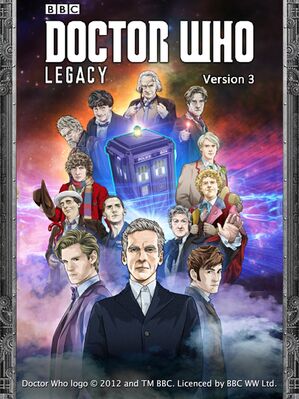
Yes, so it's still Doctor Who. But hey, after thirty plus years of substandard computer games we've finally got a decent Who game. It's a relatively simple premise - you have a five by six board of gems of different colours and by forming lines or three or more gems you battle opponents from the tv series. The more you play, the more Doctors and allies you accumulate (via winning characters on certain levels and accumulting 'time fragments' and 'time crystals') and the more potent you can make them. There's a main game (currently on its fourth chapter) with a storyline and sundry offshoot games for a bit of fun. It's simple, addictive and often frustrating as all the best games are.
Seriously, for Who fans there are fewer more fun ways to waste your life.
3. Seasons Of War
One last Doctor Who related one...
More of this early in the New Year but over the last six months I've been involved with Declan May's charity anthology which aims to tell the story of the War Doctor between Night of the Doctor and Day of the Doctor. You might notice from the above that I'm in some fine, fine company. You can find out more here and donate to obtain an ebook and details of how to get the print version here.
I'll preview my story for the book closer to the release date. But as a teaser... it's called Always Look On The Bright Side of Life and features pantomime horses, giant purple gorillas and lethal custard pies.
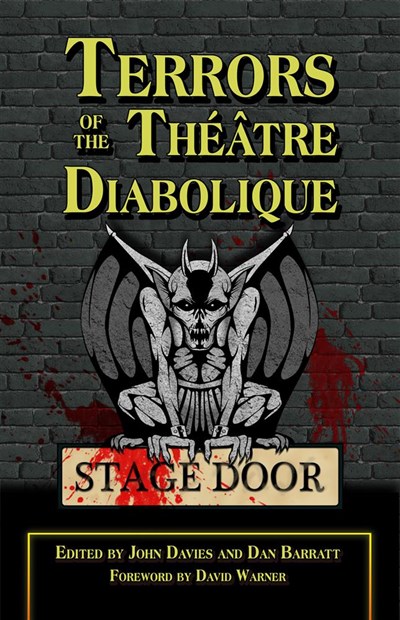
4. Terrors of the Theatre Diabolique
Something I really should have blogged about a while back and will devote proper time to in the New Year...
Early in the year Dan Barratt, Dalek operator extraordinaire, asked for submissions for a horror anthology he had in mind, one which paid tribute to the old Amicus portmanteau movies of the '70s. As originally conceived it was based around Shakespeare's Ages Of Man speech, structured around a theme that took us from cradle to grave (the latter more than once). I bagged the 'second childhood' slot and started playing around with an idea of an infernal bargain. Everything clicked when Dan made a few general requests to the authors and... well, I'll say more very soon. But along with Always Face The Curtain I think it's the best thing I've ever written.
But why should you buy it? Because within a simple but beautiful structure that's a beautiful homage to those old films whilst being something uniquely its own, there are six stories that play with the idea of the horror story in very different ways. There's traditional ghost stories, very modern takes and outright horror comedies which combine to form a hugely satisfying whole with a sublime pay-off. Go donate here and grab your digital copy today and get a link to purchase one of several rather lovely hard copy versions.
5. Red Or Dead

Liverpool FC are one of the great loves of my life. Literature is another. David Peace combines the best of both worlds, turning Shankly's time at Liverpool into something almost biblical. I loved it so much I wrote this for the fine Two Unfortunates site.
6. Fantasy football
Not so much the standard UK version where I magically managed to kill teams with long term injuries but more the NFL version where you play weekly head to heads against other teams. In one 14 team league where I'd been a cellar dweller for a good few years I turned things around and finished 12-1, pipping the 11-2 second place team to the regular season title by beating them on the last day. Course, as things turn out I'd have been better off losing that as I'd have ended up winning the playoffs but by topping the league I ran into the only guy to beat me during the season and won the third place game by a whisker (stealing it by having Emmanuel Sanders of the Denver Broncos score 19 points while AJ Green scored none). And in my work league I was running in second for most of the year before dumping Odell Beckham right before he hit form... and telling the guy who eventually got second to pick him up. And I finished third there too for the second straight season.
I know it's totally pointless, but it's a great deal of fun.
I'm of around the same age as Tom Ewing, the site's founder. His slightly insane project is essentially to review every UK Number One record (along with small offshoots such as their 100 Greatest songs of all time which finishes here with a sublime piece which makes a watertight case as to why this particular song is the greatest of all pop's myriad artefacts). I've never met Tom but he's got an uncanny ability to burrow to the heart of what a record means (even if it's something as nebulous as a feeling) and communicate it. Hit the search facility and look for any record you love that made it to the top (currently he's just finished the No 1s of the twentieth century). And keep going, because it's addictive and even when he's dealing with bland or mediocre records he's always worth reading. This is what became of the Smash Hits generation.
8. Uptown Funk
Record of the year, no contest. I love Ronson's production on Amy Winehouse's Back to Black and his own Version (heresy as it is, he does sublime, joyous things to Stop Me If You Think That You've Heard This One Before). Here he even makes me love Bruno Mars, an artist who's output's simply bounced off me before. The lyric's a standard boast but dammit, the music's distilled joy and irresistibly danceable. Happiness does prevail.
9. Before The Dawn

In the modern hyper-connected world there's little better than total surprise. David Bowie managed it with the release of Where Are We Now?, somehow conjuring magnificence to a grey January morning by breaking a near decade of silence with a melancholy wander through his own past.
Arguably that was trumped in February with Kate Bush announcing that she'd be performing in concert for the first time in 35 years. Take one moment to look at that gap. Thirty five years. I'd barely started primary school last time she went before a paying audience. And so I blagged a morning off work and, colluding with a friend, managed to grab tickets for the weekend of my wedding anniversary (one of the later shows in the run). Only the six months to wait...
Friends saw earlier shows in the run, and kindly declined to spoil details. But the word was overwhelmingly positive. Possibly I shouldn't have been surprised given Bush has an incredible attention to detail. But without, even now, spoiling the experience... it wasn't quite like any gig I'd ever been to. It mixed relative obscurities, big hits and managed to thematically connect two suites that formed full sides of albums and present them theatrically, always teetering on the edge of pretension and silliness but never, quite tumbling over. It's a trick only the bravest and boldest artists even attempt and even the small number with the nerve rarely pull it off completely. But here there an incredibly tight band combined with ambitious theatrics to utterly nail it. And an audience admittedly predisposed to love her showered their adoration down throughout the show, with Bush herself seeming shyly surprised at the affection for her. Sublime and ultimately it's one of the finest live performances I've seen. And I've been to a lot of gigs in my time.
10. The continued existence of Clive James

As I type this I've got one of my Christmas presents close at hand - Georg Lichtenberg's 'The Wast Books'. It's something I added to my wish list after my dawdle through what's probably Clive James' masterwork, Cultural Amnesia. It's a book where James takes a quote as a starting point (ranging from political dissidents who've undergone unimaginable hardship to much ridiculed Hollywood lines) for a series of essays exploring what he sees as humanity's major themes (mostly the major themes that crop up in his lifetime, notably the virtues of liberal democracy). You can criticise the essays for only skimming subjects in many cases but then the balance between erudition and populism is a fine one. And if the book had delved in such depth it'd probably be an unwieldy three of four times the size. No, in this case James had applied a lifetime of curiosity to notes down the years and the result stole the breath at times, panoramic, wise and witty. It finally banished the memories as the batrochoidal chap chuckling at Japanese game shows in the 80s.
It's only over the last decade that I've come to really appreciate James. In many ways I was the worst age to appreciate him, being too young to read his TV criticism and precisely old enough to watch him chortle and subject audiences to the camp fun of Margarita Pracatan. Knowing him from those TV shows was like thinking you knew literature by having read Fifty Shades of Grey and The Da Vinci Code. The form is (barely) there but there's so much more delicious substance beyond that. Silliness is a minor, but vital part of his armoury.
In the early part of the century, having talked to friends or founds an article online - I forget precisely how - I acquired the three volumes of his collected TV criticism. I followed up with volumes of his literary criticism (At the Pillars of Hercules and From The Land of Shadows) and ended by picking up the collected Always Unreliable, his memoirs of his life until 1980. There was the endearing self-deprecation, the dazzling way with a sentence and always, always a total lack of contempt but a clear-eyed view of what was possible in various media and why things failed if they failed. Popular intellectualism has rarely been so dazzling.
Anyway, this year I finished the dawdle through the works I own and managed to catch Howard Jacobsen's Brilliant Creatures, a documentary about James and three fellow Australians who'd shaken the cultural world (the others being Germaine Greer, Barry Humphries and Robert Hughes). So that's why he's here this year.
As is the fact that with his illnesses he's likely not to be long for the world so should be appreciated while he can. And in tribute I'm going to continue reading as widely as possible and constantly bettering myself is possible. Because it's a better world that way.
And it continues with that Christmas gift. Thanks Clive.
Anyway, happy new year!
Monday, 9 December 2013
On the Twelve Days of Christmas...
So, yeah... this is a super secret project that I've been involved in for the past four months.
 Back in August, thanks to a recommendation from the ridiculously modest but talented Glasgow
 pest writer Michael S Collins I was asked to write one of the stories for this Christmas anthology. It was based around the rather splendid and simple hook of there being twelve Doctors by the end of the year and twelve days of Christmas. Hence one Doctor for each day of the Christmas song. So, for the past few months I've been scribbling away, trying to evoke the Christmas spirit months in advance. Now I know how Noddy Holder et al felt when trying to record Merry Xmas Everybody in sweltering New York heat...
So this is the plan... over the next twelve days we're going to release the stories one Doctor at a time, working our way from Hartnell to (yes!) Capaldi. Stories come, not just from the aforementioned Mr Collins, but also Short Trips alumnus John Davies (who's done a sterling editing job on all stories, coming up with an arc story and contributing two stories himself) and Mark Clapham, author of the rather fine Eighth Doctor Adventure Hope as well as several other fine talents. All stories come illustrated in the traditional style of Doctor Who annual tales, except probably composed with less use of psychedelic substances. They'll be available individually in your choice of eBook format absolutely gratis, though if you'd like to make a donation to the National Autism society here we'd be absolutely delighted and in awe of your sheer wonderfulness.

Or, if you're the type who prefers old fashioned ink and paper copies, a print version will be forthcoming after the stories have been released. More details of that when they're available.
So if you'd be so kind, do head on over to this Facebook group, join up and enjoy some old and new-fashioned Doctor Who Christmas fun. If you're not on Facebook, let me know and we'll sort something out. Because this is rather brilliant and worth transcending any anti-Zuckerberg prejudice you may have. The prologue is already up for your delight and delectation.
In the meantime, a small teaser picture for my story which might give you a hint as to which Doctor I've had the pleasure of writing for...


So this is the plan... over the next twelve days we're going to release the stories one Doctor at a time, working our way from Hartnell to (yes!) Capaldi. Stories come, not just from the aforementioned Mr Collins, but also Short Trips alumnus John Davies (who's done a sterling editing job on all stories, coming up with an arc story and contributing two stories himself) and Mark Clapham, author of the rather fine Eighth Doctor Adventure Hope as well as several other fine talents. All stories come illustrated in the traditional style of Doctor Who annual tales, except probably composed with less use of psychedelic substances. They'll be available individually in your choice of eBook format absolutely gratis, though if you'd like to make a donation to the National Autism society here we'd be absolutely delighted and in awe of your sheer wonderfulness.

Or, if you're the type who prefers old fashioned ink and paper copies, a print version will be forthcoming after the stories have been released. More details of that when they're available.
So if you'd be so kind, do head on over to this Facebook group, join up and enjoy some old and new-fashioned Doctor Who Christmas fun. If you're not on Facebook, let me know and we'll sort something out. Because this is rather brilliant and worth transcending any anti-Zuckerberg prejudice you may have. The prologue is already up for your delight and delectation.
In the meantime, a small teaser picture for my story which might give you a hint as to which Doctor I've had the pleasure of writing for...

Sunday, 4 August 2013
Tuesday, 26 February 2013
11 in 11
Here’s the big idea:
It’s Doctor Who’s 50th anniversary this year, and
inspired by this thread on legendary/notorious forum Gallifrey Base I’ve
decided to read a book a month up to the anniversary. I may even top it off
with an epilogue of one of the Unusual Doctors in December. So, time
permitting, there should hopefully be at least one blog post per month here.
And yes, I know I’m late with January’s but hey, I’ll get to
that now…
Sunday, 7 August 2011
Tonight We're Gonna Party Like It's 1969 - The League of Extraordinary Gentlemen Century: 1969 by Alan Moore & Kevin O'Neill
It's always slightly awkward to review middle volumes of a story. Whatever you do it'll be somewhat imperfect - themes and storylines will have emerged but you won't be seeing the full picture by any means. Nevertheless Alan Moore's stated aim with the Century trilogy is for each one to tell a self contained story as well as form part of the overall tale. So it's fair game.
What we get is a story rooted firmly in 1969, the end of the hippy dream. The main elements of the story, aside from those introduced in Century: 1910,are drawn from two contemporary films that indicate the darkness that (by conventional interpretation) crept in at the end of the peace 'n' love hippy era. The first is the 1970 film Performance, which featured Mick Jagger as a dissolute rock star, the second Get Carter. From the moment Moore and O'Neill open with a recreation of the death of Brian Jones it's clear we're going to see a lot more of the League universe's version of the Rolling Stones,the Purple Orchestra. And by that extension one of the main characters is based on Jagger's character in Performance. Except now we're in the minefield of the copyright era it's Terner rather than Turner. It's not the only time a crafty copyright dodging wink is used in the volume either, the rich fictional background that could be freely employed in the volumes up to now largely reduced to almost cameo spotting. I'm still not quite sure as to whether it robs the League of a large degree of its charm. It doesn't bode entirely well for the final volume in the series, particularly when coupled with Moore's murmurings about finding 2009 a barren cultural wasteland. Perhaps the frontier of pop culture of today has simply moved beyond his interests, as it must eventually move beyond us all. Certainly his pronouncments on the state of comics (however valid you find them) indicate a certain degree of alienation from modern fictions.
Moore's discomfort with modern culture is perhaps best reflected in an emergig theme, shown in a division between the two core characters of Allen Quartermain and Mina Harker over their attitude to effective immortality. Mina attempts to embrace the social changes of the era, seemingly not entirely successfully whilst Quartermain remains uncomfortable with change, mired in Victorian values to a degree. Moore is ambivalent about both approaches, showing them as both being ineffective as neither approach really deals with the major problem of living beyond your era. The longer you live, the less you understand of an ever changing world, and that seems to be the real problem at the root of the contrasting approaches. It'll be fascinating to see how that's resolved in the final volume.
As usual though, what makes the story work is the synchronicity between Moore and Kevin O'Neill. Once more there's a wealth of devils in the detail, a blizzard of references salted away in the artwork (including at least three to Doctor Who, something almost certainly pure O'Neill given Moore's oft stated distate for the post-Hartnell Doctors). As ever this means it requires multiple reads to catch the references, and even then you can't be certain of catching everything without recourse to Jess Nevins' ever excellent annotations. It certainly flavours what might otherwise be fairly dull exposition and journey scenes, but as usual he references are an added bonus and not really essential in understanding the tale at hand - maybe it helps to know that the song soundtracking the Hyde Park sequences is based closely on Sympathy for the Devil but that's pretty much it. It's not just the enhancement of Moore's stories with all sorts of detail that distinguishes O'Neill's work though, it's the shifts in style and tone to reflect mood and time that enhances the story here. Indeed, the psychedelic sequences that provide the backdrop for the climactic battle of wills is probably a highlight of O'Neill's work on the series. And I say that as someone who's absolutely adored O'Neill's previous work on the series.
As ever with Moore though, there's an edge to his story I don't particularly like. Sometimes it manifests in extreme violence (as in, say, Watchmen), but more often in a creepy sexual elemen. Here, if you can catch the references to identify Mina's companion in the Hyde Park scenes, then I'd be surprised if that character fingering a tripped out Mina wouldn't have one of the biggest selling authors of the past ten years activating her legal magicians. Certainly, it fits with the souring edge of hippydom that the Orchestra's gig represents (and which the Stones' Hyde Park gig represetned in our universe) and I'm certain such thins happened, but I'm not sure it's entirely necessary to the story.
Century: 1969 certainly ends up functioning as a story in its own right, ending not on a direct cliffhanger but instead in an intriguing position with the shade of Haddo escaping to continue his moonchild/Antichrist plans and Mina missing, possibly dragged off to a madhouse but possibly to another, more nefarious fate. And the final punk song is as ominous as the ending of Century: 1910, foreshadowing nothing but misery. Satisfying then, but as to whether it's the second course of a gourmet meal we'l have to wait another year or so to find out.
What we get is a story rooted firmly in 1969, the end of the hippy dream. The main elements of the story, aside from those introduced in Century: 1910,are drawn from two contemporary films that indicate the darkness that (by conventional interpretation) crept in at the end of the peace 'n' love hippy era. The first is the 1970 film Performance, which featured Mick Jagger as a dissolute rock star, the second Get Carter. From the moment Moore and O'Neill open with a recreation of the death of Brian Jones it's clear we're going to see a lot more of the League universe's version of the Rolling Stones,the Purple Orchestra. And by that extension one of the main characters is based on Jagger's character in Performance. Except now we're in the minefield of the copyright era it's Terner rather than Turner. It's not the only time a crafty copyright dodging wink is used in the volume either, the rich fictional background that could be freely employed in the volumes up to now largely reduced to almost cameo spotting. I'm still not quite sure as to whether it robs the League of a large degree of its charm. It doesn't bode entirely well for the final volume in the series, particularly when coupled with Moore's murmurings about finding 2009 a barren cultural wasteland. Perhaps the frontier of pop culture of today has simply moved beyond his interests, as it must eventually move beyond us all. Certainly his pronouncments on the state of comics (however valid you find them) indicate a certain degree of alienation from modern fictions.
Moore's discomfort with modern culture is perhaps best reflected in an emergig theme, shown in a division between the two core characters of Allen Quartermain and Mina Harker over their attitude to effective immortality. Mina attempts to embrace the social changes of the era, seemingly not entirely successfully whilst Quartermain remains uncomfortable with change, mired in Victorian values to a degree. Moore is ambivalent about both approaches, showing them as both being ineffective as neither approach really deals with the major problem of living beyond your era. The longer you live, the less you understand of an ever changing world, and that seems to be the real problem at the root of the contrasting approaches. It'll be fascinating to see how that's resolved in the final volume.
As usual though, what makes the story work is the synchronicity between Moore and Kevin O'Neill. Once more there's a wealth of devils in the detail, a blizzard of references salted away in the artwork (including at least three to Doctor Who, something almost certainly pure O'Neill given Moore's oft stated distate for the post-Hartnell Doctors). As ever this means it requires multiple reads to catch the references, and even then you can't be certain of catching everything without recourse to Jess Nevins' ever excellent annotations. It certainly flavours what might otherwise be fairly dull exposition and journey scenes, but as usual he references are an added bonus and not really essential in understanding the tale at hand - maybe it helps to know that the song soundtracking the Hyde Park sequences is based closely on Sympathy for the Devil but that's pretty much it. It's not just the enhancement of Moore's stories with all sorts of detail that distinguishes O'Neill's work though, it's the shifts in style and tone to reflect mood and time that enhances the story here. Indeed, the psychedelic sequences that provide the backdrop for the climactic battle of wills is probably a highlight of O'Neill's work on the series. And I say that as someone who's absolutely adored O'Neill's previous work on the series.
As ever with Moore though, there's an edge to his story I don't particularly like. Sometimes it manifests in extreme violence (as in, say, Watchmen), but more often in a creepy sexual elemen. Here, if you can catch the references to identify Mina's companion in the Hyde Park scenes, then I'd be surprised if that character fingering a tripped out Mina wouldn't have one of the biggest selling authors of the past ten years activating her legal magicians. Certainly, it fits with the souring edge of hippydom that the Orchestra's gig represents (and which the Stones' Hyde Park gig represetned in our universe) and I'm certain such thins happened, but I'm not sure it's entirely necessary to the story.
Century: 1969 certainly ends up functioning as a story in its own right, ending not on a direct cliffhanger but instead in an intriguing position with the shade of Haddo escaping to continue his moonchild/Antichrist plans and Mina missing, possibly dragged off to a madhouse but possibly to another, more nefarious fate. And the final punk song is as ominous as the ending of Century: 1910, foreshadowing nothing but misery. Satisfying then, but as to whether it's the second course of a gourmet meal we'l have to wait another year or so to find out.
Thursday, 14 January 2010
Let's Put Our Heads Together, And Start A New Country Up - Nation by Terry Pratchett
I go back a long way with Terry Pratchett, all of 23 years now. Back when Caldicot Library was a portakabin on the school grounds and I was still in the early stages of being allowed to explore the adult section at last. Not that the thrill of having the half of the library on the other side of the issue desk suddenly open stopped me from sampling the wit and imagination of the children's section, with the likes of the Doctor Who novelisations of Nils Olof Franzen's Agaton Sax books. In fact the adult section wasn't that wonderful, Caldicot being a tiny library at that point. And a lot of the adult books I might've contemplated taking out I'd already read - the likes of Douglas Adams or Tolkien. So I'd mainly confined myself to football autobiographies (where the deeds of heroes are so much more epic and grand in scale before you grow up and realise they're only human) and the odd interesting looking book. In 1987 I found a very odd, interesting looking book indeed. It hadn't been taken out that much if the stamps in the front were to be believed, and I was too young to know what horrors 'comic fantasy' usually entailed. Despite the unpromising element of it having a couple of female leads, I still checked it out. And I was glad I did, because Equal Rites introduced me to the wit, wisdom and comic timing of Terry Pratchett.
In retrospect Equal Rites was a fine place to start. It's where the Discworld novels as we knew them really started to form, where Pratchett moved beyond the more simplistic fantasy parodies of The Colour of Magic and The Light Fantastic, but before any sort of predictability could set in. It's where Pratchett begins to really underlay his stories with vicious satire, but could still almost be taken for a simple fantasy author. Just ahead of when his popularity exploded, just before he really got into his stride with Mort. And I've largely stayed with him ever since, even when I thought the books were perhaps becoming a little predictable and seemed almost churned out rather than inspired (around the turn of the millennium). I'm sure they weren't, but that was how it felt.
I say largely as I'd taken something of a sabbatical from his books whilst expanding horizons elsewhere - I'd read Thud!, but a copy of Making Money still lies in one of the vast, teetering to read piles. It took the resolution to clear the books I'd got for Christmas or bought second hand to bring me back to him. I'd found a copy of Nation in the local Oxfam shop, and snapped it up along with Colin Wilson's biography of Alister Crowley and Christopher Brookmyre's Quite Ugly One Morning. And Nation was first off that particular pile.
It's always a pleasure to return to Pratchett, a writer who's always had the ability to tell a strong story clearly and beautifully whilst layering it with themes and meaning. That warmly exasperated tone is like an old friend, effectively communicating humanity's potential and failure to achieve it, inextricably meshing his main theme into his work. It's a voice that I can always match to writer when I see him interviewed, and one that's clearly still well honed, seemingly ever sharper as the years pass and books pile up. Reading Nation, I could at times almost hear that exasperation tip into anger.
Nation sees Pratchett taking on big themes, religion, science and how they help (of have helped) us deal with the world and, inevitably, religion vs science. It'd be simple for him to simply encapsulate them in his main characters, Mau (tribesman) and Daphne (shipwrecked aristo) but, creditably, he never descends to that level of simplicity, that simply wouldn't fit with what he's trying to say at all. Pratchett comes to definite conclusions about the uses of religion and science in dealing with the world (specifically and fairly obviously that the best way to deal with the world is to think about and understand it in whatever terms), but it never feels force fed and merits of both positions are examined. It's noticeable, as ever, that the characters who end up worst off in a Pratchett book (largely dead in this case) are the ones who can't adapt, and those that do end up triumphant at the story's end. It's Darwinism played for laughs. The tackling of a religious theme, where the existence of gods is left indeterminate, doesn't lend itself to the deity ridden Discworld. Pratchett locked that world into having deities way back in The Colour of Magic, the need to be deliberately vague about the supernatural explains why he's writing outside the confines of a recurring series for the first time in a long time.
Pratchett's experience and natural aptitude for a good story means these themes aren't anywhere near as dull as they'd be in other hands. As much as the topics he's discussing this is a fine adventure story in the classic sense, about two msimatched people rebuilding a society following a natural disaster. While there's jeopardy aplenty, the story's got just enough room to breathe and provide us with character moments and little narrative twists you don't expect. Pratchett's always understood the journey of a good story will take you places you didn't expect, and he's also understood the best stories leave you somewhere you didn't quite expect (but ends up being exactly where you want to be). He refuses to bend the logic he's set up to provide a cosy, conventional happy ending. Because, as he points out, life isn't like that.
It's refreshing to return to an old favourite after so long away, and even better when he's encountered in less familiar surroundings. Nation maintains my love of Pratchett as one of the smartest yet least didactic writers out there, one who's always conscious of never cheating his audience, nor talking down to them. The Radio Times was almost apologetic when previewing Radio 4's current adaptation of Small Gods, with the usual caveat of 'if you thought Pratchett was for 40 year old men still living with their mums'. The thing is, his work is not and never has been. Nation's simultaneously as smart an allegory, and gripping an adventure as what's perceived as more literary fiction. Being outside his other series may mean it comes to be regarded as an oddity, but it shouldn't be, because, in a quieter way, it's as strong as any of his previous work.
In retrospect Equal Rites was a fine place to start. It's where the Discworld novels as we knew them really started to form, where Pratchett moved beyond the more simplistic fantasy parodies of The Colour of Magic and The Light Fantastic, but before any sort of predictability could set in. It's where Pratchett begins to really underlay his stories with vicious satire, but could still almost be taken for a simple fantasy author. Just ahead of when his popularity exploded, just before he really got into his stride with Mort. And I've largely stayed with him ever since, even when I thought the books were perhaps becoming a little predictable and seemed almost churned out rather than inspired (around the turn of the millennium). I'm sure they weren't, but that was how it felt.
I say largely as I'd taken something of a sabbatical from his books whilst expanding horizons elsewhere - I'd read Thud!, but a copy of Making Money still lies in one of the vast, teetering to read piles. It took the resolution to clear the books I'd got for Christmas or bought second hand to bring me back to him. I'd found a copy of Nation in the local Oxfam shop, and snapped it up along with Colin Wilson's biography of Alister Crowley and Christopher Brookmyre's Quite Ugly One Morning. And Nation was first off that particular pile.
It's always a pleasure to return to Pratchett, a writer who's always had the ability to tell a strong story clearly and beautifully whilst layering it with themes and meaning. That warmly exasperated tone is like an old friend, effectively communicating humanity's potential and failure to achieve it, inextricably meshing his main theme into his work. It's a voice that I can always match to writer when I see him interviewed, and one that's clearly still well honed, seemingly ever sharper as the years pass and books pile up. Reading Nation, I could at times almost hear that exasperation tip into anger.
Nation sees Pratchett taking on big themes, religion, science and how they help (of have helped) us deal with the world and, inevitably, religion vs science. It'd be simple for him to simply encapsulate them in his main characters, Mau (tribesman) and Daphne (shipwrecked aristo) but, creditably, he never descends to that level of simplicity, that simply wouldn't fit with what he's trying to say at all. Pratchett comes to definite conclusions about the uses of religion and science in dealing with the world (specifically and fairly obviously that the best way to deal with the world is to think about and understand it in whatever terms), but it never feels force fed and merits of both positions are examined. It's noticeable, as ever, that the characters who end up worst off in a Pratchett book (largely dead in this case) are the ones who can't adapt, and those that do end up triumphant at the story's end. It's Darwinism played for laughs. The tackling of a religious theme, where the existence of gods is left indeterminate, doesn't lend itself to the deity ridden Discworld. Pratchett locked that world into having deities way back in The Colour of Magic, the need to be deliberately vague about the supernatural explains why he's writing outside the confines of a recurring series for the first time in a long time.
Pratchett's experience and natural aptitude for a good story means these themes aren't anywhere near as dull as they'd be in other hands. As much as the topics he's discussing this is a fine adventure story in the classic sense, about two msimatched people rebuilding a society following a natural disaster. While there's jeopardy aplenty, the story's got just enough room to breathe and provide us with character moments and little narrative twists you don't expect. Pratchett's always understood the journey of a good story will take you places you didn't expect, and he's also understood the best stories leave you somewhere you didn't quite expect (but ends up being exactly where you want to be). He refuses to bend the logic he's set up to provide a cosy, conventional happy ending. Because, as he points out, life isn't like that.
It's refreshing to return to an old favourite after so long away, and even better when he's encountered in less familiar surroundings. Nation maintains my love of Pratchett as one of the smartest yet least didactic writers out there, one who's always conscious of never cheating his audience, nor talking down to them. The Radio Times was almost apologetic when previewing Radio 4's current adaptation of Small Gods, with the usual caveat of 'if you thought Pratchett was for 40 year old men still living with their mums'. The thing is, his work is not and never has been. Nation's simultaneously as smart an allegory, and gripping an adventure as what's perceived as more literary fiction. Being outside his other series may mean it comes to be regarded as an oddity, but it shouldn't be, because, in a quieter way, it's as strong as any of his previous work.
Sunday, 10 January 2010
The Jesus Lizards - Doctor Who: The Creed of the Kromon
It's a fairly good job that Gary Russell asked Philip Martin to make the titular monsters insectoid rather than reptilian, otherwise this would seem even more of a retread of Martin's 80s TV scripts. Rapacious aliens, companions transforming, a Doctor pretending to cooperate with the enemy while encouraging a rebellion and a lot of corridor running? It's definitely been done before. This time though, there's no particular depth, lacking the sort of moral question Varos (TV violence) and Mindwarp (genetic engineering) posed.It's saved to a degree by one of the best thought through and realised races to appear in the Big Finish range, writing, acting and sound design combining to present a convincing alien society. Martin's script is at times overly focused on the Kromon society to the detriment of the story. He also doesn't quite seem to have the hang of writing audio drama, falling into melodrama and the trap of having the characters tell us things we can't see. The acting rescues this to a large degree though, Dan Hogarth and Steven Perring being particularly good in multiple roles. If you want a Doctor Who story that fairly slavishly evokes what the series was remembered as, Kromon is ideal. Not bad, but appropriately for a stereotypical story, fairly average.
Back to Life - Doctor Who: Project Lazarus by Mark Wright and Cavan Scott
This is so relentlessly morose and depressing it's almost teenage. Still, it's a solid sequel to the authors' first audio enlivened by the clever structure of the story and a well executed twist.
Guess who's back, back again...
Yeah, I let it slide for the last twelve months again... oops. I'll import a few reviews I'd put up on Librarything before trying it all again.
Of course, there was good reason for it. If there's anyone out there and they're remotely curious, head to Hirst Books to find out where most of my writing for last year has ended up, or check out two other fine Doctor Who fanzines, DWIN's Enlightenment (issue 155) and Bob Funnell's Whotopia (issue 18), which should be available soon, if they aren't already.
Of course, there was good reason for it. If there's anyone out there and they're remotely curious, head to Hirst Books to find out where most of my writing for last year has ended up, or check out two other fine Doctor Who fanzines, DWIN's Enlightenment (issue 155) and Bob Funnell's Whotopia (issue 18), which should be available soon, if they aren't already.
Thursday, 3 April 2008
33 1/3: Let's Talk About Love - A Journey To The Edge of Taste
That's it, I've blown my non-existent cool quotient already. Here's me blowing it further - it's one of the most interesting books about music you're likely to come across. But hey, if you stick with it through this you might even come back in future. And it's early days, so I haven't really established any expectations of what I'll blog about, so I might as well use the opportunity to blog about anything and everything. On with the show then...
I love the approach the 33 1/3 series takes. It's fairly simple - the writer takes a 'classic' album and takes an in depth look at it. No restriction on how they talk about the passion, but the editorial team appear to encourage a ' more personal the better' approach, and that's something I'd rather read than a standard band and/or recording history. I don't necessarily enjoy each book (the volume on R.E.M.'s Murmur turned me right off by attempting a clinical dissection of every aspect) but it's more than made up for by relative triumphs such as Bowie's Low or Meat Is Murder by The Smiths, which is far more about how fans related to The Smiths than a flat out review. And then this, for me their finest achievement.
If you're anything like me, you're wondering why a 'classic' album series goes anywhere near the Celine Dion ouevre - yep, in the late Nineties she was pretty bloody ubiquitous with godawful squalling ballads like Think Twice, the Titanic love theme abomination My Heart Will Go On and making a new generation relive the nightmares of previous ones with covers of Jennifer Rush's The Power of Love and All By Myself (those links, incidentally, come with an aural health warning). That's where the genius comes in - for all the column inches expended on cult favourites such as The Smiths or Radiohead, Dion's sales dwarf theirs into insignificance. Readers of Q, NME, Rolling Stone or Spin would rather cut their ears off than willingly subject themselves to her overpowering, turned up beyond 11 voice (one of Wilson's most insightful asides is his take on Dion's music as 'hair metal on oestrogen'). Well, unless irony is involved. So Wilson goes beyond the usual remit of music journalism and, without once breaking into the regulation music journo's sneer at the bovine masses, goes to find out exactly who's buying these albums and why. Oh, and why we Cool Kids can't bloody stand her of course.
It's clearly not for her public persona, which is largely bland bar an outburst about impoverished victims of Hurricane Katarina in New Orleans. She comes across as almost teeth grindingly nice, reassuring Elliott Smith before both performed at the Oscars, donating a cool million to those hurricane victims and, most reassuringly of all, not being sure that My Heart Will Go On was any cop when asked to record it. No, as Wilson concludes, it lies in her being deeply uncool and about as close to emotionally direct as you get in the music industry. Think about it, how few cool acts directly confront emotion but instead rely on the smoke and mirrors of metaphor. Irrelevant here, but importantly to me, it's that emtional directness that Russell T Davies has tapped into to gain Doctor Who a female fanbase and popularity undreamt of since the height of Dalekmania.
Wison also employs some dense cultural theory to good effect, employing studies of whether artistic or popular taste is scientifically quantifiable and proving that Dion hits plenty of the right buttons in popular taste, and follows that up by playing with notions of cool. It's not always comfortable for those of us who automatically equate Dion with uncool either - cool is, of course, one of the adman's favourite weapons to sell product. The Dion devotees are largely untroubled by such notions of cool, which perversely might make them cooler in real terms than the fans who provide the music press with the bulk of their readership. And her fandom's activities are uncomfortably close to those of any other online fans you care to name - there's fanfic and online confessionals reminiscent of fanboy/fangrrrl sites, fans who attend as many gigs as humanly possible and obsess over the minutiae of her back catalogue. They're just like us. And they don't care about what others think of their Celine love. Of course, this gets undercut when you see the ruthless marketing of Dion for various territories, the various strategies employed to ensure every country in the world buys her records (such as her recording in various languages, singing on film soundtracks or singing with local backing bands). Cool or uncool, the marketing execs will find a way to sell you product, which is a tad depressing. Still, it gives you something to admire Celine Dion fans for, we music press readers are the herd animals who don't know we're the herd.
A good friend of mine who died last year had My Heart Will Go On played at her funeral, naturally I thought of it at the time as something to be tuned out, but it left a hell of a lot of people blinking away tears. It's the sort of thing that makes you feel what 40s detective movies used to call a heel, it was as meaningful to her as any of my touchstone tunes are to me. Maybe I've been wrong all along. I can't say I'm ever going to enjoy a Celine Dion tune but I might not dismiss it with the mandatory thoughtless sneer. If this book can get someone like me, violently allergic to Dion as I am, to rethink such ingrained assumptions then it has to be classed as something of a triumph.
I love the approach the 33 1/3 series takes. It's fairly simple - the writer takes a 'classic' album and takes an in depth look at it. No restriction on how they talk about the passion, but the editorial team appear to encourage a ' more personal the better' approach, and that's something I'd rather read than a standard band and/or recording history. I don't necessarily enjoy each book (the volume on R.E.M.'s Murmur turned me right off by attempting a clinical dissection of every aspect) but it's more than made up for by relative triumphs such as Bowie's Low or Meat Is Murder by The Smiths, which is far more about how fans related to The Smiths than a flat out review. And then this, for me their finest achievement.
If you're anything like me, you're wondering why a 'classic' album series goes anywhere near the Celine Dion ouevre - yep, in the late Nineties she was pretty bloody ubiquitous with godawful squalling ballads like Think Twice, the Titanic love theme abomination My Heart Will Go On and making a new generation relive the nightmares of previous ones with covers of Jennifer Rush's The Power of Love and All By Myself (those links, incidentally, come with an aural health warning). That's where the genius comes in - for all the column inches expended on cult favourites such as The Smiths or Radiohead, Dion's sales dwarf theirs into insignificance. Readers of Q, NME, Rolling Stone or Spin would rather cut their ears off than willingly subject themselves to her overpowering, turned up beyond 11 voice (one of Wilson's most insightful asides is his take on Dion's music as 'hair metal on oestrogen'). Well, unless irony is involved. So Wilson goes beyond the usual remit of music journalism and, without once breaking into the regulation music journo's sneer at the bovine masses, goes to find out exactly who's buying these albums and why. Oh, and why we Cool Kids can't bloody stand her of course.
It's clearly not for her public persona, which is largely bland bar an outburst about impoverished victims of Hurricane Katarina in New Orleans. She comes across as almost teeth grindingly nice, reassuring Elliott Smith before both performed at the Oscars, donating a cool million to those hurricane victims and, most reassuringly of all, not being sure that My Heart Will Go On was any cop when asked to record it. No, as Wilson concludes, it lies in her being deeply uncool and about as close to emotionally direct as you get in the music industry. Think about it, how few cool acts directly confront emotion but instead rely on the smoke and mirrors of metaphor. Irrelevant here, but importantly to me, it's that emtional directness that Russell T Davies has tapped into to gain Doctor Who a female fanbase and popularity undreamt of since the height of Dalekmania.
Wison also employs some dense cultural theory to good effect, employing studies of whether artistic or popular taste is scientifically quantifiable and proving that Dion hits plenty of the right buttons in popular taste, and follows that up by playing with notions of cool. It's not always comfortable for those of us who automatically equate Dion with uncool either - cool is, of course, one of the adman's favourite weapons to sell product. The Dion devotees are largely untroubled by such notions of cool, which perversely might make them cooler in real terms than the fans who provide the music press with the bulk of their readership. And her fandom's activities are uncomfortably close to those of any other online fans you care to name - there's fanfic and online confessionals reminiscent of fanboy/fangrrrl sites, fans who attend as many gigs as humanly possible and obsess over the minutiae of her back catalogue. They're just like us. And they don't care about what others think of their Celine love. Of course, this gets undercut when you see the ruthless marketing of Dion for various territories, the various strategies employed to ensure every country in the world buys her records (such as her recording in various languages, singing on film soundtracks or singing with local backing bands). Cool or uncool, the marketing execs will find a way to sell you product, which is a tad depressing. Still, it gives you something to admire Celine Dion fans for, we music press readers are the herd animals who don't know we're the herd.
A good friend of mine who died last year had My Heart Will Go On played at her funeral, naturally I thought of it at the time as something to be tuned out, but it left a hell of a lot of people blinking away tears. It's the sort of thing that makes you feel what 40s detective movies used to call a heel, it was as meaningful to her as any of my touchstone tunes are to me. Maybe I've been wrong all along. I can't say I'm ever going to enjoy a Celine Dion tune but I might not dismiss it with the mandatory thoughtless sneer. If this book can get someone like me, violently allergic to Dion as I am, to rethink such ingrained assumptions then it has to be classed as something of a triumph.
Subscribe to:
Posts (Atom)